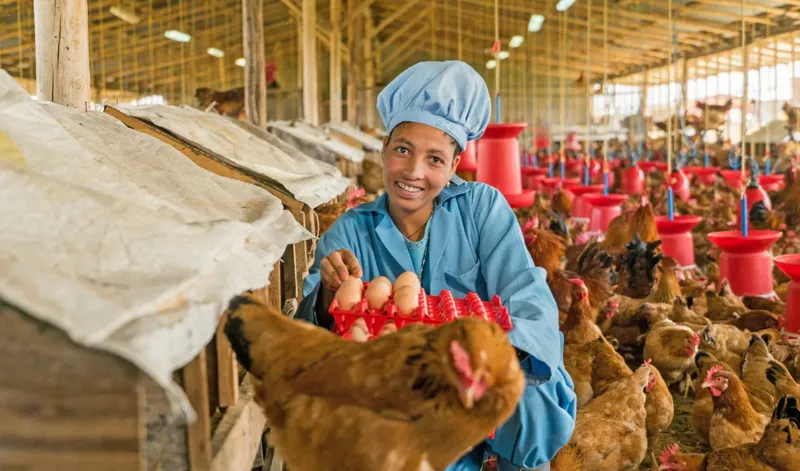
Women and children-centered poultry farming and nutrition
Integrating poultry farming with nutrition-sensitive interventions is a powerful tool for empowering women and improving the health of children in rural communities. This approach addresses food insecurity by providing direct access to high-quality animal-source foods like eggs and meat, which are essential for child growth and cognitive development. The Impact on Nutrition Poultry farming serves as a direct pathway to better dietary outcomes for households:
• Essential Nutrients: Eggs and chicken meat provide high-quality protein and micronutrients like choline, zinc, and Vitamin B12. One egg a day can significantly improve weight-for-age (WAZ) and weight-for-height (WHZ) scores in children.
• Dietary Diversity: Successful programs often include nutrition education, which encourages families to diversify their diets by incorporating more vegetables and animal-source foods. Some studies have shown dietary diversity increasing from 11% to over 70% following such interventions.
• Health and Development: Coupled with behavior change communication (BCC), poultry interventions have reduced child anemia and improved gross motor skills like running and kicking a ball.
Women's Empowerment through Poultry Women are typically the primary managers of village poultry, making it an accessible entry point for economic and social empowerment:
• Income & Resource Control: Revenue from selling eggs or chickens allows women to invest in household health and education.
• Decision-Making: Participation in poultry programs can increase a woman's autonomy in household purchases and child feeding decisions.
• Overcoming Barriers: Unlike large livestock, chickens require fewer inputs and less land, making them an effective way for women to build capital and overcome limited access to credit.
Key Focus Areas
Community Engagement
Working directly with local communities
Measurable Impact
Data-driven outcomes and reporting
Sustainable Solutions
Long-term environmental focus
Partnerships
Collaborative approach to development