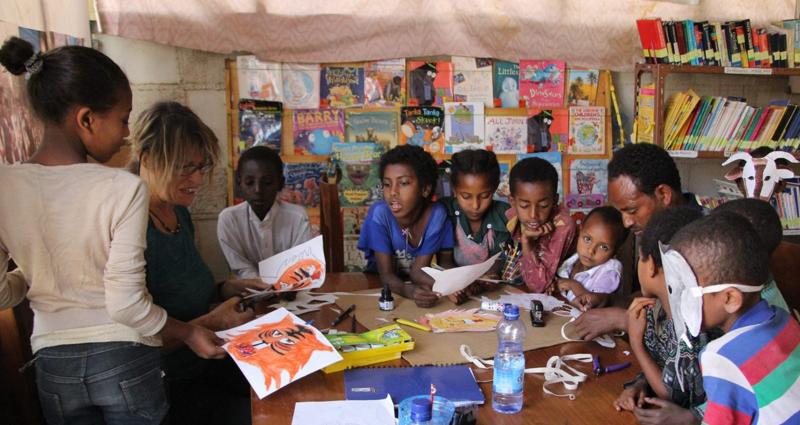
Selam Action for Women Empowerment (SAWE) employs a comprehensive model designed to promote gender equality and empower women in Ethiopia through several interconnected components. It focuses on providing education and vocational training to enhance women's skills and employability, alongside facilitating economic empowerment through microfinance initiatives and entrepreneurship support. The organization also addresses health needs by offering reproductive health education and services, while advocating for women's rights and providing legal assistance to combat gender-based violence. Community engagement is a crucial aspect, with awareness campaigns aimed at challenging harmful cultural norms and practices. Additionally, SAWE fosters leadership development among women to encourage their participation in decision-making processes, builds networks and partnerships to maximize resource sharing, and implements monitoring and evaluation systems to assess the effectiveness of its programs. This holistic approach aims to dismantle the multifaceted barriers that women face, leading to sustainable empowerment and an improved quality of life.
Summary of the components of the SAWE model
• Education and Vocational Training
• Economic Empowerment
• Health Services
• Advocacy for Women's Rights
• Community Engagement
• Leadership Development
• Networking and Partnerships
• Monitoring and Evaluation
Experiences of SAWE
• The Community Partnership Program to foster collaboration between local communities, organizations, and stakeholders to address social issues and enhance sustainable development initiatives.
• Climate action to initiatives and strategies aimed at mitigating climate change impacts, promoting environmental sustainability, and advocating for policies that reduce greenhouse gas emissions.
• Women and children-centered poultry farming and nutrition refers to initiatives that empower women and improve the nutritional status of children by promoting sustainable poultry farming practices, enhancing food security, and providing access to protein-rich foods.
Partnerships developed and functional
• Local Women's Organizations: Collaborate to provide grassroots support and advocacy for women's rights at the community level.
• International NGOs: Offer funding, resources, and expertise to scale up women's empowerment initiatives and programs.
• Microfinance Institutions: Provide financial services and training to help women start businesses and achieve economic independence.
• Health Organizations: Deliver critical health services and education focused on women's health and reproductive rights.
• Educational Institutions: Conduct research and develop training programs aimed at enhancing women's leadership and advocacy skills.